Ages 3 to teens
Ballet
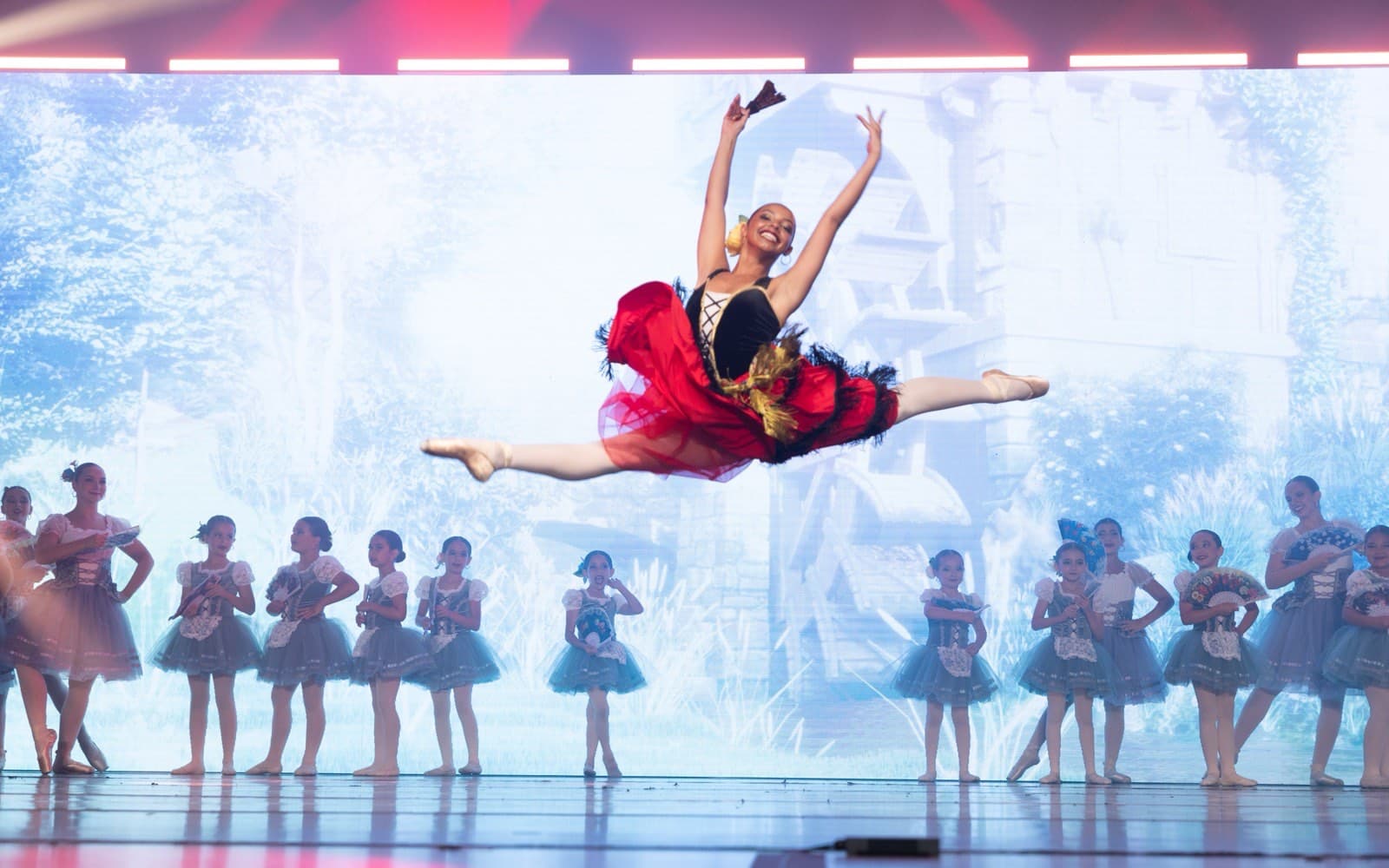
The foundation nearly every other style is built on. Play-led at three to six so they fall for it, then taught the classical way from seven so they get good at it.
What it actually is
Ballet is where nearly every other style gets its rules: turnout, alignment, the five positions, and a French vocabulary that means the same thing in every studio in the world. Jazz, contemporary and lyrical are all built on top of it, which is why a dancer who takes ballet picks up everything else faster. At three to six the whole job is to make them love it — music they recognise, exercises with names and pictures they understand, and games that look like play and are not, because each one is teaching one specific thing. From seven it becomes an hour of its own, taught the classical way, and that structure is what turns a child who enjoys ballet into a dancer who can hold their own in whatever style they take next.
What they'll be doing
Words that work anywhere
Plié, tendu, relevé. The vocabulary is French and it is the same in Doral as it is in Madrid or New York. A dancer who learns it here can walk into a ballet class anywhere and follow it.
Play with a point
At three to six, nothing in the room looks like a lesson. Music they know, images they understand, games they would pick themselves — and every one of them built around a single thing that class is there to teach.
A real barre, from seven
The class runs the way ballet has always run: barre, then centre, then combinations across the floor, in the same order every week. Progressive Ballet Technique is built into it, so strength arrives before the extension it allows.
Is this your child?
Ballet, yes
- Music comes on and they spin, then check whether you were watching
- They are up on their toes on the kitchen tile and have not noticed they are doing it
- They rewind the same five seconds of a video and copy it until it matches
- Being told "not quite, again" does not deflate them. They want to know how to get it right.
Try contemporary instead
- They invent their own dances and never do one the same way twice. Ballet wants the shape exactly as written. Contemporary wants what they bring.
- They end up on the floor: rolling, crawling, no shoes. Ballet works up on the feet. Contemporary lives down there.
- Being told "exactly like this" takes the fun out of it for them. That is most of a ballet class. Contemporary starts here at ten — before that, ballet is still where training begins.
What a class looks like
The shape changes with the age. At three to six ballet is half the class, and it moves: positions, posture and travelling steps, arrived at through music, images and games, with flamenco or tap filling the other half. From seven it is an hour of its own, and it is a working hour — the same warm-up, the same progression, the same corrections a ballet class has given for two hundred years, which is what makes it possible to get good at it. Come spring, part of that hour goes to the piece they take to the recital stage.
- Monday
- 8:00 PM
- Wednesday
- 5:00 PM · 6:00 PM · 7:00 PM
- Thursday
- 5:00 PM
- Friday
- 5:00 PM · 6:00 PM